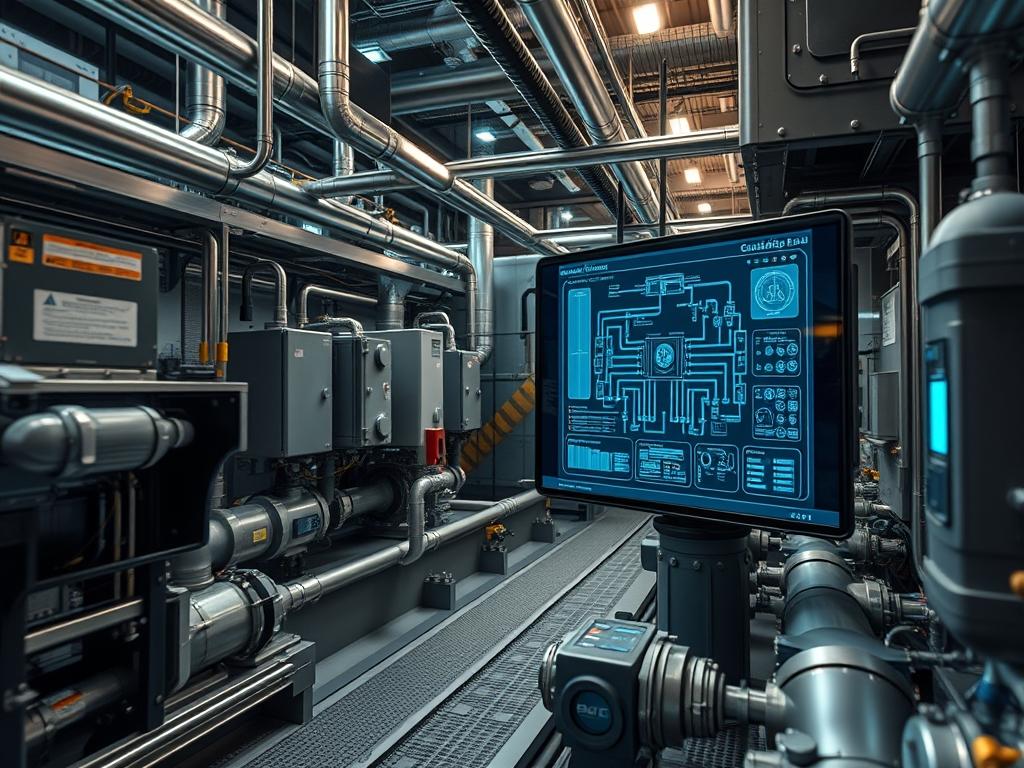
Safety Engineering for Ozone Destruct Unit Operation

Ozone Destruct Unit Operation

Ozone Destruct Unit Operation is a critical safety requirement for any industrial facility utilizing ozone generators for water purification; chemical oxidation; or semiconductor cleaning. Nitrogen and oxygen gas streams enriched with high concentrations of ozone (O3) represent a significant hazardous waste stream that cannot be vented directly into the atmosphere. The Ozone Destruct Unit (ODU) … Read more

Cleaning Protocols for UV Quartz Sleeve Maintenance

UV Quartz Sleeve Maintenance

Effective UV Quartz Sleeve Maintenance is a critical prerequisite for high-availability water treatment and industrial sterilization infrastructures. Within the broader technical stack of environmental engineering and automated utility management, the quartz sleeve acts as the primary physical interface between the UV lamp and the fluid payload. Its primary function is the encapsulation of the light … Read more

Improving Dissolution with Ozone Mass Transfer Efficiency

Ozone Mass Transfer Efficiency

Ozone Mass Transfer Efficiency (OMTE) serves as the primary benchmark for assessing the integration of ozone gas into aqueous streams. Within a high-performance infrastructure stack; whether for industrial wastewater remediation, ultrapure water loops, or advanced chemical processing; OMTE dictates the ratio of utilized oxidative payload to wasted energy overhead. The fundamental challenge in ozone dissolution … Read more

Optimizing Hydraulics for UV Reactor Chamber Design

UV Reactor Chamber Design

UV Reactor Chamber Design serves as the critical intersection of fluid mechanics and electromagnetic radiation delivery within modern industrial water treatment and wastewater remediation stacks. Within the broader technical infrastructure; including municipal water cycles, semiconductor fabrication cooling, and pharmaceutical grade liquid processing; the UV reactor functions as an idempotent disinfection gate. It ensures that biological … Read more

Ensuring Constant Output with Ozone Generator Calibration

Ozone Generator Calibration

Ozone Generator Calibration ensures the predictable synthesis of O3 molecules by aligning electrical discharge parameters with feed-gas flow rates in real-time. In high-output water treatment, semiconductor manufacturing, or large-scale industrial sanitation, the ozone generator functions as a critical node within the infrastructure stack. Without precise calibration, the system suffers from inconsistent payload delivery; the actual … Read more

Maximizing Efficiency with UV Lamp Lifecycle Management

UV Lamp Lifecycle Management

UV Lamp Lifecycle Management represents a critical intersection of physical asset longevity and digital monitoring within industrial water treatment and air purification infrastructures. Within the broader technical stack, this discipline functions as a performance-critical layer between the hardware power delivery system and the supervisory control and data acquisition (SCADA) network. The primary objective is to … Read more

Measuring the Strength of Ozone Oxidation Potential

Ozone Oxidation Potential

Ozone Oxidation Potential, frequently metrics-tested as Oxidation-Reduction Potential (ORP), serves as the definitive indicator of an aqueous or gaseous system’s ability to undergo oxidative reactions. Within industrial technical stacks such as high-throughput water treatment, semiconductor fabrication, and critical HVAC infrastructure, ozone acts as a high-potency oxidant that must be modulated with extreme precision. The “Problem-Solution” … Read more

Engineering Precision through UV Dose Calculation Logic

UV Dose Calculation Logic

UV Dose Calculation Logic serves as the deterministic core of modern fluid and air sterilization systems; it is the mathematical bridge between raw photonic emission and biological inactivation efficacy. Within the broader infrastructure stack, this logic functions as a critical middleware layer situated between hardware physical sensors and top-level Supervisory Control and Data Acquisition (SCADA) … Read more

Creating Comprehensive Greywater Technical Documentation Packages

Greywater Technical Documentation

Greywater Technical Documentation serves as the fundamental blueprint for the intersection of civil hydraulics and digital automation. In a modern infrastructure stack, greywater management has evolved from passive plumbing to an active, sensor-rich asset class that requires precise integration with Building Information Modeling (BIM) and Supervisory Control and Data Acquisition (SCADA) systems. The scope of … Read more

Handling Settled Solids through Greywater Sludge Management

Greywater Sludge Management

Greywater Sludge Management represents the critical extraction and stabilization layer within modern decentralized water processing architectures. While greywater is typically defined by its low pathogen count relative to blackwater, the accumulation of organic solids, hair, lint, and biomaterials creates a high density payload that can compromise system throughput if left unmanaged. Integrated Greywater Sludge Management … Read more