
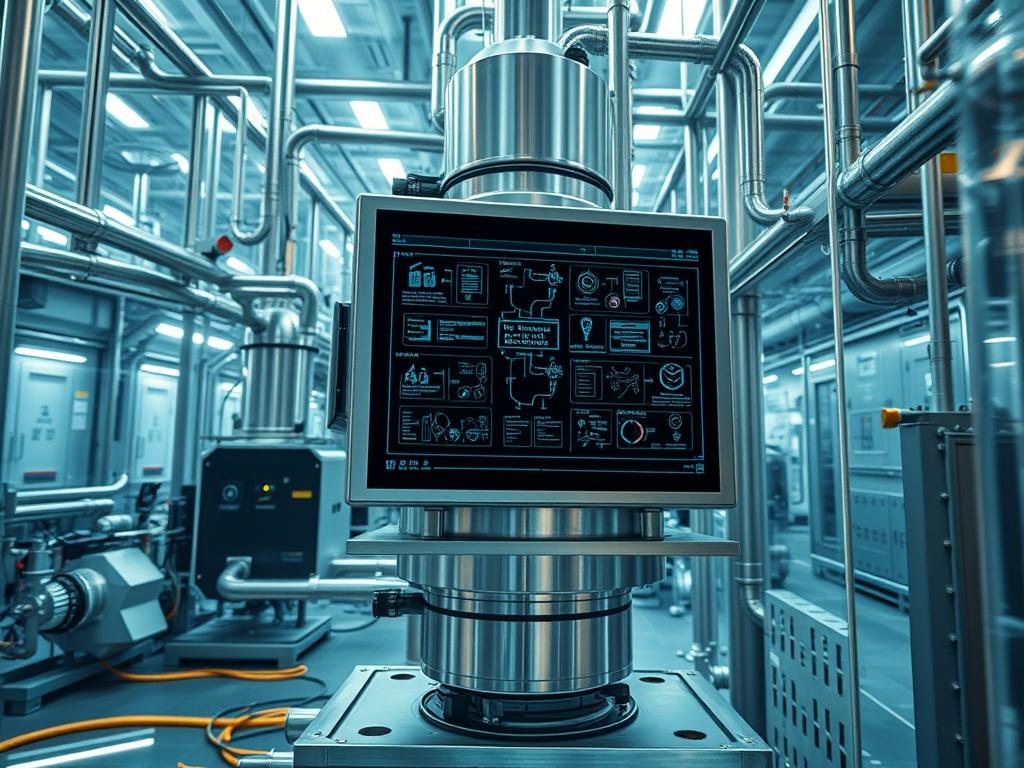
Ozone Microbubble Diffusers represent the critical interface for gas-to-liquid mass transfer within advanced oxidation processes (AOP). In traditional aqueous systems, gas dissolution is often limited by the large diameter of injected bubbles; these large bubbles rise rapidly due to buoyancy, resulting in low residence time and high gas loss. Ozone Microbubble Diffusers mitigate this inefficiency by generating bubbles typically ranging from 10 to 50 micrometers in diameter. This reduction in size increases the interfacial surface area-to-volume ratio exponentially, allowing for a significant decrease in mass transfer latency. The primary objective is to maximize the ozone payload within the fluid while minimizing the energy overhead required for gas generation. By optimizing the saturation kinetics governed by Henry’s Law, these diffusers solve the problem of oxidative throughput bottlenecks in water treatment, semiconductor fabrication, and industrial sanitization. This manual details the architectural integration and configuration for high-yield ozone microbubble systems.
TECHNICAL SPECIFICATIONS
| Requirement | Default Operating Range | Protocol/Standard | Impact Level (1-10) | Material/Grade |
|:—|:—|:—|:—|:—|
| Gas Feed Pressure | 0.2 – 0.4 MPa | ISO 4414 | 9 | SUS316L Stainless |
| Liquid Throughput | 50 – 500 L/min | ASME B31.3 | 7 | Schedule 80 PVC |
| Ozone Concentration | 5% – 15% by weight | IEEE 1100 | 8 | Quartz/Teflon |
| ORP Measurement | 200 – 900 mV | Modbus RTU / RS-485 | 6 | Platinum/Gold |
| Power Frequency | 50/60 Hz | NEC Class 2 | 5 | NEMA 4X |
| Pore Size | 0.5 – 20 microns | ASTM E128 | 10 | Porous Ceramic |
THE CONFIGURATION PROTOCOL
Environment Prerequisites:
1. Ensure the system environment complies with NFPA 496 standards for purged and pressurized enclosures if operating in volatile atmospheres.
2. User permissions for the Logic Controller must be set to Administrator level to modify PID-Loop coefficients.
3. Hardware dependencies include a high-purity oxygen concentrator and a corona discharge ozone generator capable of sustaining a 10% payload concentration.
4. Physical assets must be secured using ASTM-F1505 insulated tools during high-voltage generator calibration.
Section A: Implementation Logic:
The engineering design of the microbubble interface relies on the principle of minimizing buoyancy while maximizing surface area. As bubble diameter decreases, the internal pressure of the bubble increases according to the Young-Laplace equation; this enhances the driving force for gas dissolution into the liquid phase. The implementation logic utilizes a venturi-shrouded porous ceramic core. Unlike standard diffusers, this setup employs a high-velocity liquid stream to shear nascent bubbles from the ceramic surface before they can coalesce. This design ensures that the gas-liquid mixture maintains a high level of encapsulation, preventing the premature escape of ozone as “off-gas.” The resulting suspension behaves as a quasi-homogeneous fluid with extremely low signal-attenuation in the ultrasonic range, providing an ideal medium for oxidation.
STEP-BY-STEP EXECUTION
1. Integrity Verification of the Diffuser Core
Inspect the Diffuser-Housing for microscopic fissures or particulate fouling. Use a fluke-multimeter to verify that any electronic moisture sensors within the gas feed line show high impedance (infinity), indicating a dry environment.
System Note: This step ensures that no moisture enters the ozone generator. Water ingress causes nitric acid formation, which leads to hardware corrosion and catastrophic dielectric failure within the ozone cell.
2. Manifold Assembly and Pressure Boundary Establishment
Mount the Venturi-Injector and Diffuser-Assembly using Teflon-Lined gaskets. Tighten all M8-Bolts in a star pattern to a torque of 12 Newton-meters. Connect the Flow-Meter to the primary liquid inlet.
System Note: Establishing a consistent pressure boundary prevents packet-loss in the gas stream, ensuring the ozone payload reaches the diffuser at a constant velocity without turbulent signal-attenuation.
3. Gas-Line Purge and Leak Detection
Execute the command systemctl start ozone-purge.service to clear the gas lines with dry oxygen for 300 seconds. Apply a non-conductive leak detection solution to all joints from the Oxygen-Concentrator to the Mixing-Manifold.
System Note: Oxygen purging removes ambient humidity and nitrogen. This step is idempotent; it can be repeated without system degradation to ensure a baseline purity of 93% oxygen prior to ozone production.
4. Logic Controller and Modbus Integration
Connect the RS-485 cable from the ORP-Sensor to the PLC-Input-Module. Map the technical variable VAR_ORP_VALUE to memory address 0x40001. Set the baud rate to 9600 to minimize data packet-loss over long cable runs.
System Note: The PLC uses this signal to adjust the ozone generator’s power output via a pulse-width modulation (PWM) signal. Real-time feedback is necessary to maintain the desired oxidation throughput without over-saturation.
5. Hydrostatic Testing and Initial Activation
Slowly open the Inlet-Valve to the Contact-Chamber. Monitor the Pressure-Gauge for fluctuations. Once the liquid flow is stabilized, activate the Ozone-Generator via the Control-Panel interface.
System Note: Initial activation under load tests the thermal-inertia of the cooling system. Rapid temperature spikes can indicate poor circulation or high resistance within the microbubble diffuser pores.
6. Fine-Tuning the Microbubble Shearing Velocity
Adjust the Bypass-Valve to increase liquid velocity across the Diffuser-Surface. Use a high-intensity strobe light to visually confirm the transition from large bubbles to a “milky” microbubble cloud.
System Note: High shearing velocity reduces bubble size but increases the energy overhead of the pump. The goal is to find the equilibrium point where mass transfer efficiency outweighs the localized pressure drop.
Section B: Dependency Fault-Lines:
The most frequent failure point in Ozone Microbubble Diffusers is the “Coalescence Trap.” This occurs when high gas flow rates exceed the shearing capacity of the liquid stream, causing microbubbles to merge into larger, less effective volumes. Another common bottleneck is the “Calcium-Scale-Inhibitor” conflict; if the feed water has high mineral content, the micro-pores in the Ceramic-Element will clog within 100 operating hours. This creates back-pressure that can damage the upstream Ozone-Check-Valve. Regular descaling cycles using a 10% citric acid solution are mandatory to maintain the throughput integrity of the porous media.
THE TROUBLESHOOTING MATRIX
Section C: Logs & Debugging:
When diagnosing system failures, architects must review the logs located at /var/log/syslog/ozone_manager.log. Look for specific error strings regarding “Pressure-Differential-High” or “ORP-Signal-Low.”
- Error Code 0x01 (Low Gas Flow): Check the Oxygen-Feed-Regulator. Ensure the solenoid at /dev/ttyS0 is responding to trigger signals. This usually indicates a physical blockage in the Micro-Pore-Interface.
- Error Code 0x05 (High Thermal Inertia): Verify the cooling water flow to the ozone generator. If the generator exceeds 40 degrees Celsius, ozone decomposition increases rapidly, lowering the effective payload.
- Sensor Drift: If the ORP-Sensor shows erratic values (signal-attenuation), inspect the Shielded-Twisted-Pair cabling. High-voltage interference from the generator can induce noise in the 4-20mA loop.
- Visual Debugging: A clear discharge at the venturi indicates total gas dissolution; a cloudy discharge indicates successful microbubble suspension. A “churning” surface in the contact tank suggests catastrophic bubble coalescence.
OPTIMIZATION & HARDENING
Performance Tuning (Throughput and Efficiency):
To optimize the mass transfer, synchronize the ozone generator’s frequency with the liquid flow’s Reynolds number. Operating in the turbulent flow regime (Re > 4000) at the point of injection facilitates immediate encapsulation of the gas. Implementing a “Dissolved Ozone Monitor” at the midpoint of the contact chamber allows the PLC to calculate the decay rate and adjust the gas concentration dynamically, reducing unnecessary ozone production and energy overhead.
Security Hardening (Safety and Logic):
Physical safety is paramount when dealing with high-concentration ozone. Ensure the Ambient-Ozone-Sensor is hard-wired to an emergency-stop circuit that cuts power to the generator if levels exceed 0.1 ppm. On the software side, use firewall rules to restrict Modbus traffic to known MAC addresses of the Control-Node, preventing unauthorized modification of the oxidation setpoints.
Scaling Logic:
When expanding the system to handle higher volumes, utilize a parallel manifold architecture rather than increasing the size of a single diffuser. This “Horizontal Scaling” approach maintains a consistent pressure drop across each Diffuser-Unit and provides redundancy. If one unit fails or clogs, the others can maintain the required oxidation throughput, ensuring the system remains idempotent and reliable under varying load conditions.
THE ADMIN DESK
What is the ideal bubble size for maximum ozone transfer?
Bubbles between 10 and 30 microns provide the best balance. They increase the surface area-to-volume ratio significantly while maintaining enough internal pressure to drive gas into the solution, minimizing the latency of the oxidation process.
How often should the ceramic diffuser elements be cleaned?
In standard wastewater applications, schedule a chemical cleaning every 500 operating hours. If the feed water has high turbidity or mineral content, reduce this interval to 200 hours to prevent permanent pore occlusion.
Can I use standard air stones instead of microbubble diffusers?
No. Standard air stones produce bubbles in the millimeter range. These rise too quickly and provide insufficient surface area for ozone dissolution; this leads to high off-gas waste and potential oxidative damage to the facility’s ventilation.
What causes the “milky” appearance in the water?
The milky appearance is caused by the light-scattering effect of millions of microbubbles. This indicates successful gas encapsulation and high-density surface area. As the bubbles dissolve, the water will gradually return to total clarity.
Why does the ORP reading drop despite high ozone production?
This usually signifies “Ozone-Scavenging” or sensor fouling. Biofilms or mineral deposits on the platinum tip of the ORP-Sensor can cause signal-attenuation. Clean the sensor probe with a specialized solution to restore accurate detection.