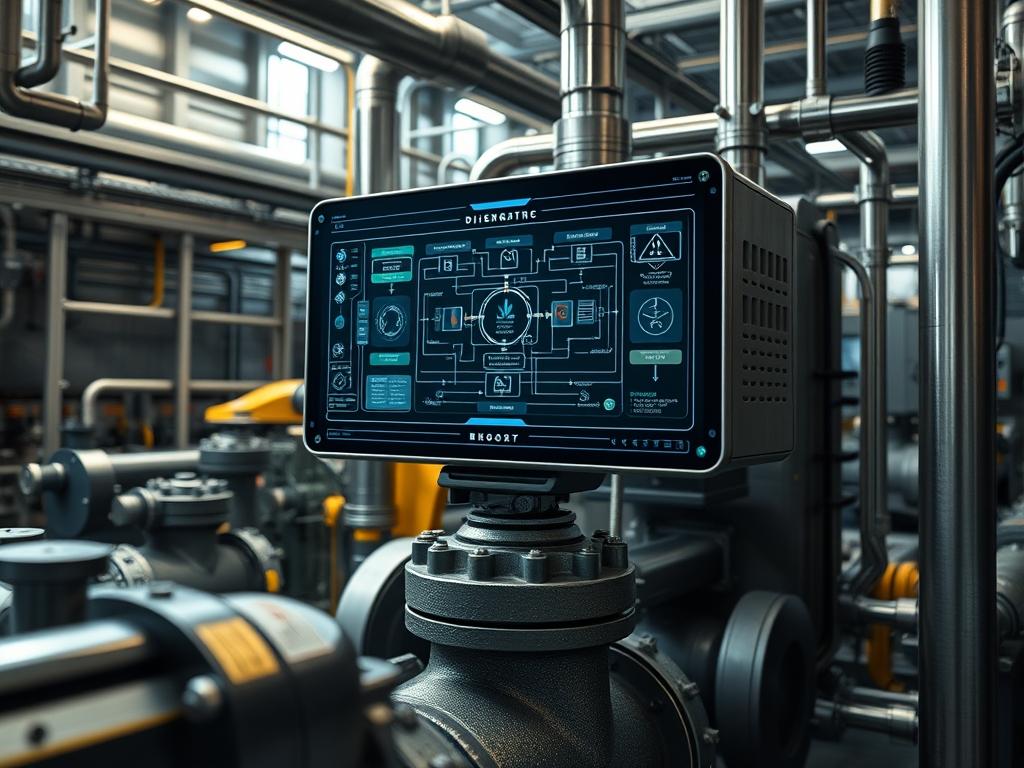
Technical Overview of Zero Liquid Discharge RO Brine Management Systems

RO Brine Management Systems

Zero Liquid Discharge (ZLD) infrastructures constitute the upper echelon of industrial water management; they are designed to eliminate all liquid waste from a system by converting brine into a high-purity distillate for reuse and solid minerals for disposal. Within the modern technical stack, RO Brine Management Systems function as the critical remediation layer for high-density … Read more

Energy Saving Applications for Low Pressure RO Membranes

Low Pressure RO Membranes

Low Pressure RO Membranes represent a critical shift in the technical stack of modern water treatment and industrial desalination infrastructure. In the legacy “high-pressure” model, the energy consumption required to overcome osmotic pressure was the primary bottleneck in operational efficiency; however, the emergence of Low Pressure RO Membranes has redefined the “Problem-Solution” context by allowing … Read more

Evaluating the Efficiency of RO Flux Enhancement Additives

RO Flux Enhancement Additives

Reverse osmosis (RO) infrastructure serves as the foundational layer for high-purity water production in power generation; semiconductor manufacturing; and municipal desalination facilities. Within this technical stack; RO Flux Enhancement Additives function as a critical performance-optimizing layer designed to mitigate the physical overhead caused by concentration polarization and membrane scaling. In high-output environments; the accumulation of … Read more

Verifying Feed Water Quality with Silt Density Index Testing

Silt Density Index Testing

Silt Density Index Testing is the primary diagnostic protocol for quantifying the fouling potential of feed water in high-performance filtration systems. In the context of industrial water treatment; specifically Reverse Osmosis (RO) and Nanofiltration (NF) stacks; this test serves as a critical telemetry layer for predicting membrane longevity. While turbidity measurements provide a snapshot of … Read more

Designing Parallel and Series RO Array Configuration

RO Array Configuration

RO Array Configuration serves as the architectural foundation for industrial desalination and ultrapure water production systems; it determines the balance between hydraulic recovery and permeate quality. In high-demand infrastructure, the configuration protocol dictates how individual membrane pressure vessels are arranged to manage osmotic pressure gradients across multiple stages. The primary engineering problem addressed by a … Read more

Predicting Maintenance Needs through Permeate Flux Decline Modeling

Permeate Flux Decline Modeling

Permeate Flux Decline Modeling serves as the primary diagnostic vector for evaluating the operational integrity of high-pressure membrane systems, including Reverse Osmosis and Nanofiltration units. Within the technical stack of industrial water treatment and chemical processing, this modeling framework bridges the gap between raw sensor telemetry and actionable maintenance intelligence. The fundamental problem addressed by … Read more

Identifying Performance Loss from RO Membrane Compaction Signs

RO Membrane Compaction Signs

Identifying RO Membrane Compaction Signs is a critical diagnostic process for maintaining the integrity of industrial water purification and desalination infrastructure. Within the broader technical stack, this process functions as the physical layer monitoring component of a water-as-a-service or utility-scale energy plant. Unlike biological fouling or mineral scaling, membrane compaction represents an irreversible mechanical degradation … Read more

Comparing Molecular Cutoff in Nanofiltration vs Reverse Osmosis

Nanofiltration vs Reverse Osmosis

The technical divergence in Nanofiltration vs Reverse Osmosis revolves around the rejection mechanism of the semi-permeable membrane barrier and the specific molecular weight cut-off (MWCO). While both systems utilize cross-flow filtration to manage mass transfer, their specific cut-off profiles determine their placement within the broader infrastructure stack, whether in municipal water treatment, pharmaceutical manufacturing, or … Read more

Optimizing Flux Distribution with RO Interstage Pressure Control

RO Interstage Pressure Control

Reverse osmosis systems deployed in high-capacity industrial environments often face a critical inefficiency known as flux imbalance. This phenomenon occurs when the lead membrane elements in the first stage produce a disproportionately high volume of permeate while the tail elements in the second stage underperform due to increased osmotic pressure. RO Interstage Pressure Control serves … Read more

Preventing Biofilm Growth with Microbiological Control in RO

Microbiological Control in RO

Microbiological Control in RO represents the primary defense mechanism against the colonization of semi-permeable membranes by biological agents. Within the broader technical stack of high-density infrastructure, such as data center cooling loops or industrial power generation, the Reverse Osmosis (RO) unit functions as the critical filtration layer. This layer is susceptible to biofilm formation: a … Read more