
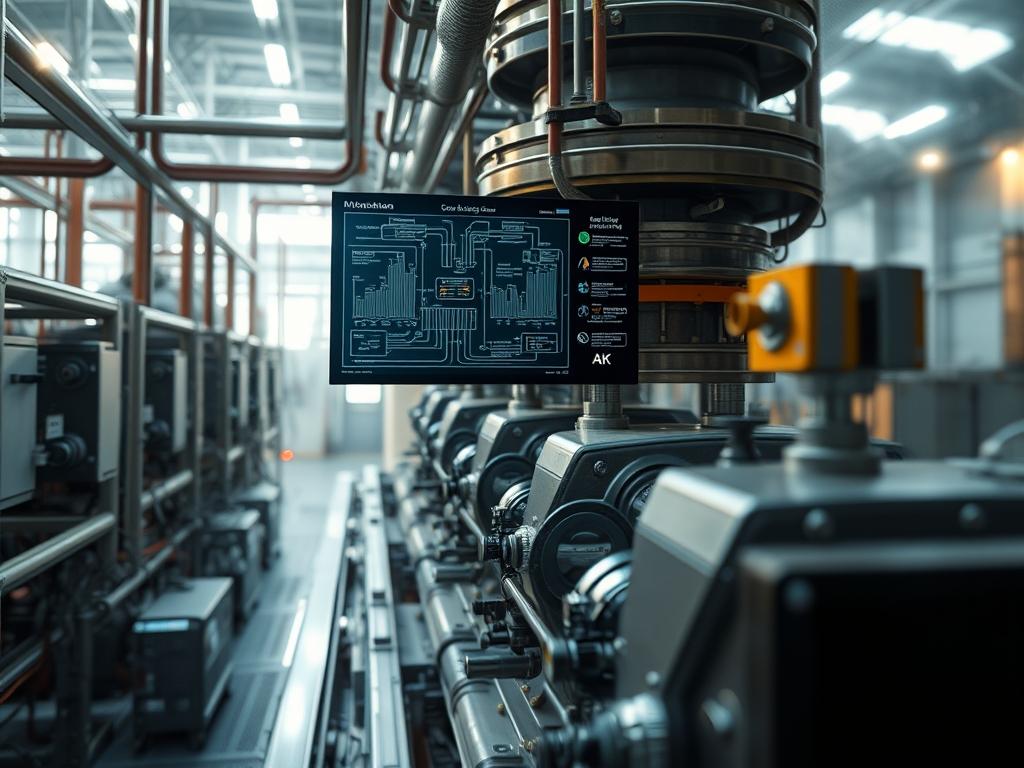
Ozone for iron and manganese removal represents the pinnacle of oxidative water treatment for industrial and municipal infrastructure. This methodology utilizes the high oxidation potential of triatomic oxygen to convert soluble ferrous iron and manganous manganese into insoluble precipitates. Unlike traditional aeration or chemical chlorination, ozone facilitates an almost instantaneous reaction that minimizes the footprint of the contact vessel while maximizing throughput. This system is a critical component of the primary treatment stack, situated before high-efficiency filtration media like anthracite or greensand. The problem-solution context involves the elimination of metallic fouling in downstream assets; specifically, preventing the accumulation of oxide scales in heat exchangers, membrane systems, and distribution piping. Failure to manage these precursors leads to increased hydraulic resistance and premature failure of high-value components.
TECHNICAL SPECIFICATIONS
| Requirement | Default Operating Range | Protocol/Standard | Impact Level (1-10) | Recommended Resources |
| :— | :— | :— | :— | :— |
| Ozone Dosage (Iron) | 0.44 mg/L per 1.0 mg/L Fe | AWWA G480 | 9 | 316L Stainless Steel |
| Ozone Dosage (Mn) | 0.94 mg/L per 1.0 mg/L Mn | EPA Method 415.3 | 10 | PVDF Injectors |
| System Pressure | 15.0 to 45.0 PSI | ASME B31.3 | 7 | Schedule 80 Piping |
| Contact Time (T_c) | 2.0 to 4.5 Minutes | NSF/ANSI 61 | 8 | Concrete/Steel Tanks |
| Power Consumption | 8.0 to 12.0 kWh/kg O3 | IEEE 519 | 6 | 480V 3-Phase Supply |
| Control Hardware | 4-20mA / Modbus TCP | IEC 61131-3 | 9 | PLC / SCADA Node |
THE CONFIGURATION PROTOCOL
Environment Prerequisites:
Deployment of an ozone-based oxidation stack requires strict adherence to safety and engineering standards. The facility must maintain a functional Ozone Destruct Unit to handle off-gas concentrations. Electrical systems must comply with NEC Article 497 for high-frequency corona discharge systems. All gaskets and seals must be composed of Viton or PTFE to prevent material degradation. Minimum user permissions for the integrated SCADA system include “Level 3 Engineering Access” for modifying the PID loop parameters on the Variable Frequency Drive (VFD) controlling the oxygen concentrator.
Section A: Implementation Logic:
The engineering design rests on the principle of redox potential optimization. Ozone for iron and manganese removal functions by disrupting the electron shell of dissolved metals. Soluble iron (Fe2+) loses an electron to form ferric iron (Fe3+), which immediately hydrolyzes into ferric hydroxide [Fe(OH)3]. Manganese follows a similar but more complex path; it must be oxidized to manganese dioxide (MnO2). The logic for the control system must be idempotent; every iteration of the logic loop should verify the presence of an incoming flow signal before activating the Corona Discharge cell. This prevents the accumulation of ozone in the contact column during zero-flow events, which would otherwise lead to gas binding and potential seal rupture.
Step-By-Step Execution
1. Initialize Oxygen Feed System
Verify the purity of the source gas using the Oxygen Purity Sensor. The feed gas must maintain a minimum of 93 percent O2 concentration to ensure the throughput of the ozone generator.
System Note: Activating the Air Preparation Unit ensures the dry-side dew point is below -60 degrees Celsius. This prevents the formation of nitric acid within the discharge tube, which would otherwise cause signal-attenuation and physical pitting of the dielectric surface.
2. Configure the Venturi Injection Manifold
Adjust the Pressure Regulating Valve (PRV) to maintain a differential pressure across the Venturi Injector. The motive flow must be sufficient to create a vacuum of at least 15 inches of mercury.
System Note: This command utilizes a physical pressure differential to achieve gaseous encapsulation within the water stream. Proper vacuum levels ensure that the ozone payload is finely dispersed, increasing the surface-to-volume ratio for reaction kinetics.
3. Calibrate the ORP Control Loop
Access the Logic Controller via the local HMI and set the Oxidation-Reduction Potential (ORP) setpoint to +450mV for iron or +600mV for manganese.
System Note: The PID Controller modulates the power output of the generator. High latency in the sensor feedback loop can lead to ozone over-dosing, which may re-solubilize manganese into permanganate (MnO4-), resulting in purple water at the tap.
4. Establish Contact Vessel Equilibrium
Adjust the Degassing Valve at the peak of the contact tank to ensure all non-dissolved ozone is routed to the Thermal-Catalytic Destruct Unit.
System Note: Managing the thermal-inertia of the destruct catalyst is vital. If the off-gas flow rate exceeds the thermal capacity of the unit, the catalyst temperature will drop, leading to incomplete ozone destruction and potential atmospheric leakage.
5. Final Filtration Alignment
Direct the oxidized effluent to the Multi-Media Filter bank. Verify that the Differential Pressure Gauges are calibrated to trigger a backwash cycle at 10.0 PSI.
System Note: The physical assets here perform the actual removal of the suspended solids created by the ozone. Without this stage, the oxidized iron and manganese remain in the water as particulate matter, leading to increased turbidity and packet-loss of water quality benchmarks.
Section B: Dependency Fault-Lines:
A primary bottleneck in ozone systems is the water quality interference known as TOC (Total Organic Carbon). High TOC levels create a competing ozone demand, which acts as a form of parasitic overhead. If TOC levels spike, the ozone available for iron and manganese removal drops, leading to breakthrough. Another bottleneck is pH sensitivity; manganese removal is significantly less efficient at a pH below 7.0. In such cases, the system requires a chemical pre-treatment step (e.g., sodium hydroxide injection) to stabilize the environment before the ozone stage.
THE TROUBLESHOOTING MATRIX
Section C: Logs & Debugging:
When the SCADA system triggers an “Under-Performance” alarm, the technician must analyze the Real-time Trend Logs. Look for the error string ERR-LOW-ORP-004, which indicates that the generator is at 100 percent power but the target redox potential is not being met.
1. Check the Mass Flow Meter on the ozone gas line; zero or low flow indicates a blockage in the Check Valve or a failure in the Venturi motive pump.
2. Inspect the Dielectric Cooling Loop for temperature spikes. High thermal-inertia in the cooling fluid results in reduced ozone concentration.
3. Review the Amperage Draw on the Inverter Board. High fluctuations indicate a potential arc within the Corona Discharge chamber.
4. Verify the Signal-to-Noise Ratio of the ORP probe. Fouled probes often report a flat-line voltage, causing the controller to default to a safe-state (zero output).
OPTIMIZATION & HARDENING
Performance Tuning requires the adjustment of the corona discharge frequency. Increasing the frequency can improve throughput but significantly increases the thermal load on the dielectric. Use a Fluke-multimeter to verify the duty cycle of the Pulse Width Modulation (PWM) signal from the controller to the generator transformers. For thermal efficiency, the cooling water flow rate should be dynamically linked to the ozone production rate to minimize water waste.
Security Hardening involves both digital and physical logic. The PLC must be isolated from the public internet using a Hardware Firewall with strict MAC address filtering. Access to the HMI should be restricted using a “Lock-Out, Tag-Out” (LOTO) physical protocol for the main breaker. Implement a fail-safe physical logic where a high-limit Ambient Ozone Sensor is hard-wired to the main contactor. If ambient concentrations exceed 0.1 ppm, the circuit is physically broken, bypassing the software layer entirely to ensure immediate shutdown.
Scaling Logic: To maintain efficacy under high load, the infrastructure should utilize a “N+1” modular design. Instead of one large generator, deploy multiple smaller units in parallel. This configuration allows for idempotent maintenance; one unit can be taken offline for electrode cleaning without interrupting the total system throughput.
THE ADMIN DESK
What is the ideal pH for Ozone for Iron and Manganese projects?
Iron oxidation is effective across a wide range (pH 6 to 9). However, manganese requires a pH of at least 7.2 for rapid kinetics. If the pH is too low, the reaction latency increases beyond the contact tank capacity.
How do I prevent “Purple Water” from manganese over-oxidation?
Monitor the ORP carefully. If the potential exceeds +750mV, manganese can oxidize into soluble permanganate. Ensure your PID Loop has a strict upper limit and that your Residual Ozone Sensor is calibrated to the 0.1 mg/L range.
Will ozone damage my downstream PVC piping?
Yes; ozone is a powerful oxidant that degrades standard PVC. All piping from the injection point to the degassing vessel must be 316L Stainless Steel, CPVC, or PVDF to avoid embrittlement and subsequent structural failure.
What is the specific ozone demand calculation for iron?
The stoichiometric requirement is 0.44 parts of ozone for every 1 part of iron. In practice, a safety factor of 1.5 is applied to account for background organic demand and transfer efficiency losses in the Venturi Injector.
How do I detect a leak in the Ozone Generator’s dielectric?
Monitor the Power Factor on the generator’s control panel. A sudden drop in power factor combined with an increase in moisture detection in the gas stream usually indicates a microscopic crack in the ceramic or glass dielectric tube.